A Modern Carrier: What a Company Trusted by Major Brands Looks Like

A major client will never trust their cargo to a random carrier. In this article, we break down the "reliability tests" you need to pass to gain the trust of well-known brands and secure stable contracts.
In logistics, trust is expensive. When a manufacturer or distributor hands over their cargo to a carrier, they are effectively entrusting them not only with the goods, but also with their own reputation in front of customers. Delivery delays can disrupt sales, incorrect paperwork can delay payments, and faulty transport can spoil the product.
That is why major brands choose their partners very carefully. A modern carrier is no longer just a truck owner. It is a company with streamlined processes, a proven reputation, and a readiness for digital transformation.
Let's look into the criteria that make a carrier reliable and "visible" to major clients.
An Offer That Immediately Shows Professionalism
The first contact begins with a commercial proposal. Serious carriers do not limit themselves to a brief "we have transport." They:
clearly describe the routes they are interested in;
state their rates and operating terms;
propose cooperation formats.
This allows the shipper to understand right from the start how ready the carrier is to work systematically rather than on a one-off basis.
Legal Purity and Reputation
Major companies do not take risks by working with a carrier based purely on "trust." Every partnership begins with verification:
documents — registration certificates, licenses, extracts;
legal due diligence — through services like YouControl;
reputation — reviews on Lardi-Trans and other platforms, recommendations from industry peers.
A company with a "clean record" and positive reviews automatically receives a higher level of trust.
Test Runs as a "Proof of Concept"
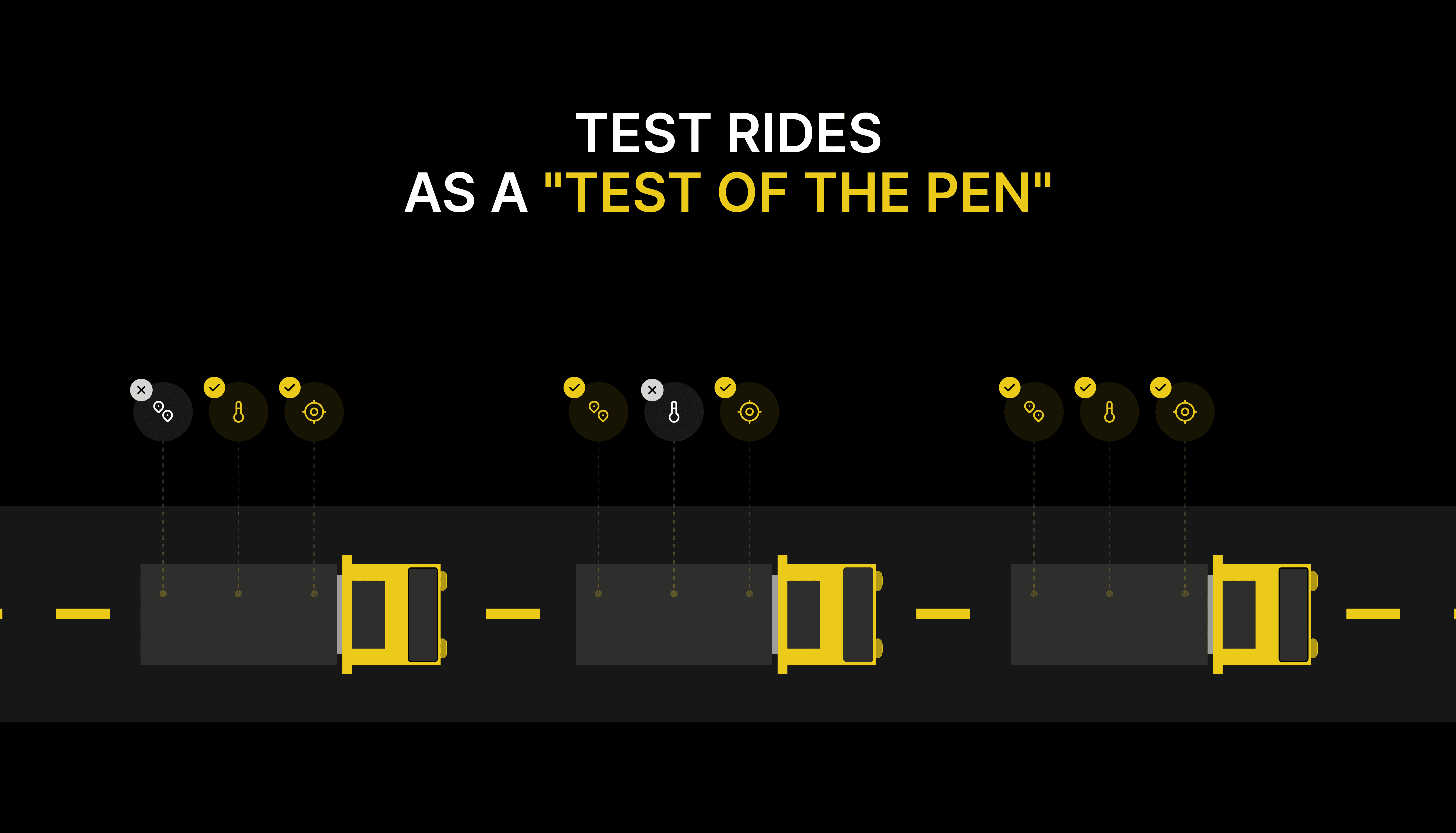
No major shipper hands over a large contract immediately. Before starting cooperation, they run several test shipments, during which the carrier must prove their reliability:
accuracy of loading/unloading by time and address;
compliance of the transport with requirements (body type, refrigerator, temperature control);
attention to details (palletizing, returnable packaging, access specifics at the facility);
GPS monitoring and communication at all stages.
Typically, this involves 1–3 runs under close supervision. If they go off without a hitch, the door to further cooperation is open.
Operational Discipline
Once the test is passed, the most important part begins — day-to-day operations. A modern carrier proves reliable when maintaining:
punctuality — at least 95% of trips without delays;
quick communication — response to inquiries within 30 minutes;
technical condition of transport — zero claims from the shipper or consignee;
efficient document turnover — prompt transfer of all documents (consignment notes, CMRs, acceptance acts, invoices) on time;
up to 5 days for domestic shipments;
up to 10 days for international shipments.
It is precisely these "details" that shape a company's image: whether it is a trusted partner or an occasional carrier used only once.
Digital Maturity
Just a few years ago, logistics relied on phone calls and paper. Today's brands, however, want to operate transparently and quickly. This means the carrier:
uses GPS tracking and provides access to the client;
works with digital document management, without scans and faxes;
integrates into the customer's systems to provide real-time status visibility;
is ready for analytics and forecasting.
Without digitalization, a carrier simply cannot compete for contracts with major players.
CONSOLID verifies carriers — and invites reliable partners
At CONSOLID, we work daily with carriers who meet all these criteria. We verify documents, check reputations, conduct test runs, and monitor adherence to standards.
This guarantees shippers security and transparency, while opening up opportunities for carriers to secure stable orders from major clients.
If you are a carrier confident in your reliability, join CONSOLID.
A Modern Carrier: What a Company Trusted by Major Brands Looks Like
A major client will never trust their cargo to a random carrier. In this article, we break down the "reliability tests" you need to pass to gain the trust of well-known brands and secure stable contracts.
In logistics, trust is expensive. When a manufacturer or distributor hands over their cargo to a carrier, they are effectively entrusting them not only with the goods, but also with their own reputation in front of customers. Delivery delays can disrupt sales, incorrect paperwork can delay payments, and faulty transport can spoil the product.
That is why major brands choose their partners very carefully. A modern carrier is no longer just a truck owner. It is a company with streamlined processes, a proven reputation, and a readiness for digital transformation.
Let's look into the criteria that make a carrier reliable and "visible" to major clients.
An Offer That Immediately Shows Professionalism
The first contact begins with a commercial proposal. Serious carriers do not limit themselves to a brief "we have transport." They:
clearly describe the routes they are interested in;
state their rates and operating terms;
propose cooperation formats.
This allows the shipper to understand right from the start how ready the carrier is to work systematically rather than on a one-off basis.
Legal Purity and Reputation
Major companies do not take risks by working with a carrier based purely on "trust." Every partnership begins with verification:
documents — registration certificates, licenses, extracts;
legal due diligence — through services like YouControl;
reputation — reviews on Lardi-Trans and other platforms, recommendations from industry peers.
A company with a "clean record" and positive reviews automatically receives a higher level of trust.
Test Runs as a "Proof of Concept"
No major shipper hands over a large contract immediately. Before starting cooperation, they run several test shipments, during which the carrier must prove their reliability:
accuracy of loading/unloading by time and address;
compliance of the transport with requirements (body type, refrigerator, temperature control);
attention to details (palletizing, returnable packaging, access specifics at the facility);
GPS monitoring and communication at all stages.
Typically, this involves 1–3 runs under close supervision. If they go off without a hitch, the door to further cooperation is open.
Operational Discipline
Once the test is passed, the most important part begins — day-to-day operations. A modern carrier proves reliable when maintaining:
punctuality — at least 95% of trips without delays;
quick communication — response to inquiries within 30 minutes;
technical condition of transport — zero claims from the shipper or consignee;
efficient document turnover — prompt transfer of all documents (consignment notes, CMRs, acceptance acts, invoices) on time;
up to 5 days for domestic shipments;
up to 10 days for international shipments.
It is precisely these "details" that shape a company's image: whether it is a trusted partner or an occasional carrier used only once.
Digital Maturity
Just a few years ago, logistics relied on phone calls and paper. Today's brands, however, want to operate transparently and quickly. This means the carrier:
uses GPS tracking and provides access to the client;
works with digital document management, without scans and faxes;
integrates into the customer's systems to provide real-time status visibility;
is ready for analytics and forecasting.
Without digitalization, a carrier simply cannot compete for contracts with major players.
CONSOLID verifies carriers — and invites reliable partners
At CONSOLID, we work daily with carriers who meet all these criteria. We verify documents, check reputations, conduct test runs, and monitor adherence to standards.
This guarantees shippers security and transparency, while opening up opportunities for carriers to secure stable orders from major clients.
If you are a carrier confident in your reliability, join CONSOLID.
Solutions
Learn more
Terms of cooperation
Contacts
CONSOLID.AI
© 2026 CONSOLID. All rights reserved.
Solutions
Learn more
Terms of cooperation
Contacts
CONSOLID.AI
© 2026 CONSOLID. All rights reserved.
Solutions
Learn more
Terms of cooperation
Contacts
CONSOLID.AI
© 2026 CONSOLID. All rights reserved.
Solutions
Learn more
Terms of cooperation
Contacts
CONSOLID.AI
© 2026 CONSOLID. All rights reserved.